

New products

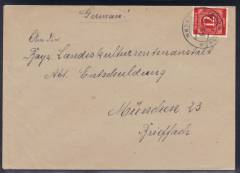
Portogerecher Fernbrief der kurzen, ersten Portoperiode bis 28.2.46 in einwandfreier Erhaltung!
Ich löse meine über viele Jahre angelegte Stempelkartei auf.
Hier Bärenverwendungen außerhalb Berlins:
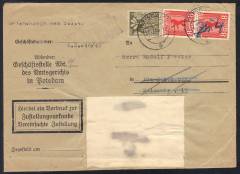
Sehr seltene, frühe Ortszustellungsurkunde mir reiner Bären-Frankatur aus Potsdam vom 11.12.45, in sehr guter Erhaltung.
Bereits im GÖTZ - Bedarfsbriefekatalog als sehr selten eingestuft.
Der alte "Frei durch Avers" und das Reichsiegel mußten damals unkenntlich gemacht werden und wurden hierzu überzeichnet und zusätzlich überklebt.
Weiter aufwertend ist, das der Brief zurück an das Amtsgericht ging und dieser Vorgang vom Postzusteller vorschriftsmäßig - wie folgt - rückseitig dokumentiert wurde:
"Rudolf Förster unbekannt. Paul Förster möcht nicht Empfänger sein." Unterschriftskürzel des Beamten + Datum 12/12
Den weiteren Zusatz unten kann ich nicht gänzlich entziffern, da der Beamte sich für den vorgeschriebenen genauen Wortlaut der Aussage, mehrfach korrigiert hat.
"Abschrift der Klage(schrift) ....... nicht (dazugelegt) beigefügt. " Unterschrift des Beamten + Datum 15/12

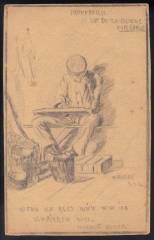
Five excellent drawings of the painter Otto Adrian in the postcard format. Partly with pencil or Indian ink, partly, in addition, coloriert.
All drawings originated during his time as a pioneer in the First World War.
Good preservation!
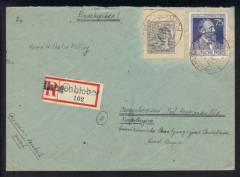
Mit seltenem Not-R-Zettel. Beide Marken mit Fremdkleber befestigt, da auch die Stephan-Sondermarke bereits einmal auf Papier haftete.
Einwandfreie Erhaltung!
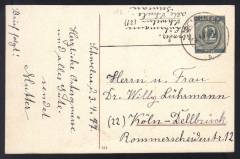
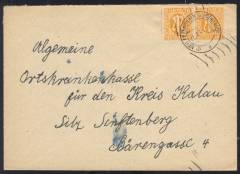
Still after the British occupation of the later SBZ area used up and uncomplained used AM post brands!
Very rare and in good preservation!

About the former German empire thrown down propaganda folder of the Britons.
Outside with pictures of two best known, German satire magazines also synchronised at that time Simplicissimus and Kladderadatsch which mock Churchill and the Britons and inside with a bad satire on Hitler and his SS!
In very good preservation!

Complete forces' postal service packet part (solid carton) for a package of 250 -1000 grams, incl. additional charges part.
Forces' postal service brand of no. 2z in rare vertical rubber!
Corresponding good preservation to circumstances in this!

Letter to a noncom of the 1st Sanitätskompanie of the 290th Infantrie division into the famous "boiler of Demjansk" in front of Moscow, Russia campaign.
Many air forces' letters of this unity might not exist any more and are extremely rare!
Corresponding good preservation to the circumstances!
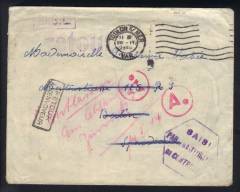
Letter of the French sailor Serge Comnet of the Peniche Guny in Toulon to Berlin-Spandau to a French forced female convict to the camp Mertensstrasse.
The presumably simple town coat of arms prepaid postage has fallen with diversenen camp-, censorship- and return - remarks, in which, for the many processing stations. Inside the fact it seems that remarks as "departed without detail of the address" or " . . . fewest late forced labor convict isn't in the camp any more " very perfidious.
Letters to the store Mertensstrasse are extremely rare!
An unusual piece corresponding to the circumstances in one good preservation!
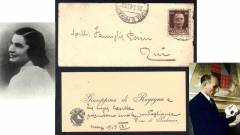
Calling card described by the countess with family armses of the di Ragognas.
The family was the counts, castle and tower masters of the province Pordenone with the provincial capital of the same name in the region Friaul-Julisch Venetien, since 1393.
Count Giuseppe di Ragogna was about that to end a well-known Italian writer and archeologist. Count Giuseppe and countess Giuseppina were benefactors of the region and the last descendants. After there death in 1970, they donated the castle, tower, villa, archeological museum and there complete property to the city of Pordenone.
( In the pictures you see the young countess and the count in front of the castle fireplace with family armses and an archeological find. )
A gem preservation appropriately good in old age!
Biglietto da visita descritto dalla contessa con uno stemma famiglia della di Ragognas.
La famiglia era dal 1393 la conta, signori di Castello e Torre della provincia di Pordenone, con l'omonimo capoluogo di provincia della regione Friuli Venezia Giulia.
Conte Giuseppe di Ragogna era anche un noto scrittore e archeologo. Giuseppe Conte e la contessa Giuseppina erano benefattori della regione e l'ultimo Nachfahren. Sie donato Castello, Torre, Villa, Museo Archeologico e loro intera proprietà della città di Pordenone dopo la sua morte durante l'anno 1970.
(Nella foto vedete la giovane contessa e il conte davanti al camino del castello con stemma della famiglia e un reperto archeologico).
Un gioiello nell'età secondo la buona conservazione.
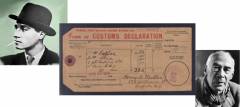
By the world-famous writer Henry Valentine Miller (1891-1980), within young years hand described Dispatchcard of a foreign package to Archshofen/Germany mailed in New York, Buffalo station on January 22nd, 1920.
His mother was from Hessen / Germany and his father was from Bavaria / Germany and who have emigrated, to USA. The package went presumably to family or friends in Germany.
An unusual piece on a philatelic document, preservation appropriately good in the circumstances!
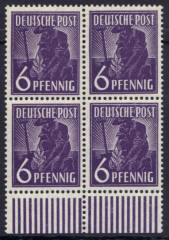
UR-Lötpaar aus dem Walzendruck
Sogenannte Lötpaare findet man hin und wieder, wenn beim Setzen der Druckplatte z.B. unterschiedliche Ober- oder Unterrandzählertypen verwendet wurden.
Solche Paare kommen nur oben oder unten in der Mitte, auf den Feldern 5 + 6 oder 95 + 96 vor.
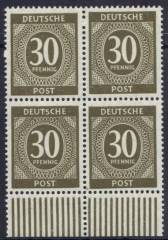
OR-Lötpaar aus dem Walzendruck
Sogenannte Lötpaare findet man hin und wieder, wenn beim Setzen der Druckplatte z.B. unterschiedliche Ober- oder Unterrandzählertypen verwendet wurden.
Solche Paare kommen nur oben oder unten in der Mitte, auf den Feldern 5 + 6 oder 95 + 96 vor.
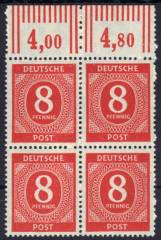
OR-Lötpaar aus dem Walzendruck
Sogenannte Lötpaare findet man hin und wieder, wenn beim Setzen der Druckplatte z.B. unterschiedliche Ober- oder Unterrandzählertypen verwendet wurden.
Solche Paare kommen nur oben oder unten in der Mitte, auf den Feldern 5 + 6 oder 95 + 96 vor.
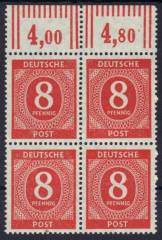
OR-Lötpaar aus dem Walzendruck.
Sogenannte Lötpaare findet man hin und wieder, wenn beim Setzen der Druckplatte z.B. unterschiedliche Ober- oder Unterrandzählertypen verwendet wurden.
Solche Paare kommen nur oben oder unten in der Mitte, auf den Feldern 5 + 6 oder 95 + 96 vor.
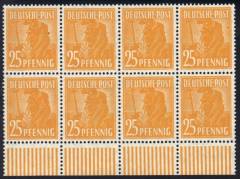
OR-Lötpaar aus dem Walzendruck.
Sogenannte Lötpaare findet man hin und wieder, wenn beim Setzen der Druckplatte z.B. unterschiedliche Ober- oder Unterrandzählertypen verwendet wurden.
Solche Paare kommen nur oben oder unten in der Mitte, auf den Feldern 5 + 6 oder 95 + 96 vor.
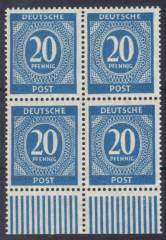
UR-Lötpaar aus dem Walzendruck
Sogenannte Lötpaare findet man hin und wieder, wenn beim Setzen der Druckplatte z.B. unterschiedliche Ober- oder Unterrandzählertypen verwendet wurden.
Solche Paare kommen nur oben oder unten in der Mitte, auf den Feldern 5 + 6 oder 95 + 96 vor.
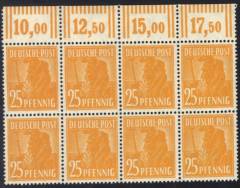
OR-Lötpaar aus dem Walzendruck
Sogenannte Lötpaare findet man hin und wieder, wenn beim Setzen der Druckplatte z.B. unterschiedliche Ober- oder Unterrandzählertypen verwendet wurden.
Solche Paare kommen nur oben oder unten in der Mitte, auf den Feldern 5 + 6 oder 95 + 96 vor.

OR-Lötpaar aus dem Walzendruck
Sogenannte Lötpaare findet man hin und wieder, wenn beim Setzen der Druckplatte z.B. unterschiedliche Ober- oder Unterrandzählertypen verwendet wurden.
Solche Paare kommen nur oben oder unten in der Mitte, auf den Feldern 5 + 6 oder 95 + 96 vor.

UR-Lötpaar aus dem Walzendruck
Sogenannte Lötpaare findet man hin und wieder, wenn beim Setzen der Druckplatte z.B. unterschiedliche Ober- oder Unterrandzählertypen verwendet wurden.
Solche Paare kommen nur oben oder unten in der Mitte, auf den Feldern 5 + 6 oder 95 + 96 vor.
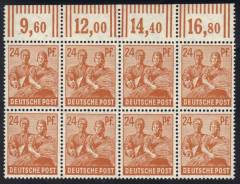
OR-Lötpaar aus dem Walzendruck
Sogenannte Lötpaare findet man hin und wieder, wenn beim Setzen der Druckplatte z.B. unterschiedliche Ober- oder Unterrandzählertypen verwendet wurden.
Solche Paare kommen nur oben oder unten in der Mitte, auf den Feldern 5 + 6 oder 95 + 96 vor.

UR-Lötpaar aus dem Walzendruck
Sogenannte Lötpaare findet man hin und wieder, wenn beim Setzen der Druckplatte z.B. unterschiedliche Ober- oder Unterrandzählertypen verwendet wurden.
Solche Paare kommen nur oben oder unten in der Mitte, auf den Feldern 5 + 6 oder 95 + 96 vor.






modified eCommerce Shopsoftware © 2009-2026 • Design & Umsetzung Rehm Webdesign
Due to the small business status according to § 19 UStG., we charge no sales tax